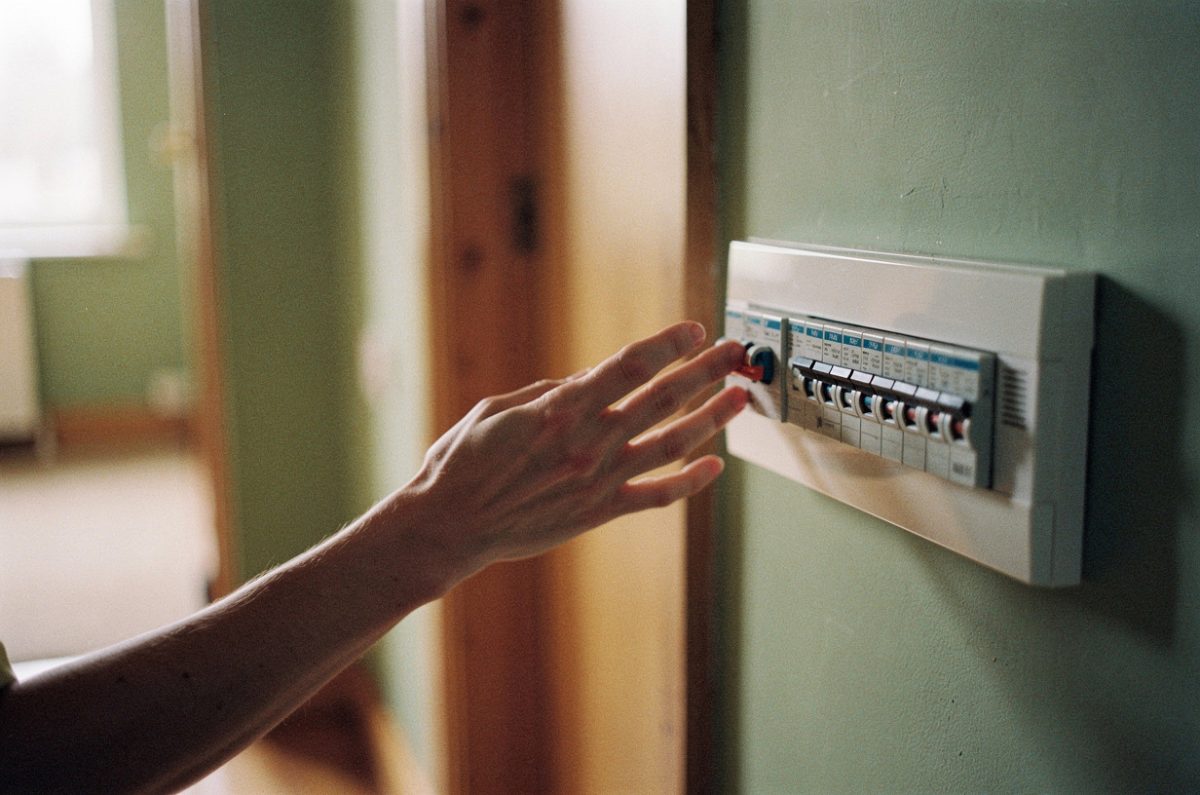
A tripping fuse (properly, a tripping breaker) is your fusebox doing its job — it’s cut the power to protect you from something. Nine times out of ten you can find the culprit yourself in five minutes and save a call-out. Here’s the exact order we’d tell you to work through.
First thing to know
Go to your consumer unit — the fusebox — and see which switch has flicked to OFF (or sits in the middle). That tells you which circuit is unhappy. Now unplug everything on that circuit: kettle, toaster, phone chargers, the lot. Reset the switch. If it holds, plug things back in one at a time, waiting a moment between each. The item that trips it again is your faulty appliance — often a kettle, an old fridge, or a garden tool that’s got damp. If the breaker won’t reset even with everything unplugged, or it trips the instant you switch it, stop there: that’s wiring, not an appliance, and it needs a professional.
Safety note
If you ever smell burning, see a scorch mark, or a socket is hot or buzzing — don’t keep resetting the breaker. Leave that circuit off and call us. Resetting into a genuine fault is how small problems become fires. A breaker that keeps tripping is a warning, not a nuisance to be overridden.
When to call us
Call if the breaker won’t hold with everything unplugged, if it’s the big “RCD” switch that keeps going (that usually points to moisture or a cable fault), or if it’s tripping randomly with no obvious cause. Our first 90 minutes of fault-finding is a fixed £115 — we trace it properly with test instruments rather than swapping parts and hoping, and we fix it so it stays fixed.
Want a price for this?
Get an honest range in two minutes with the instant estimate — no contact details needed.