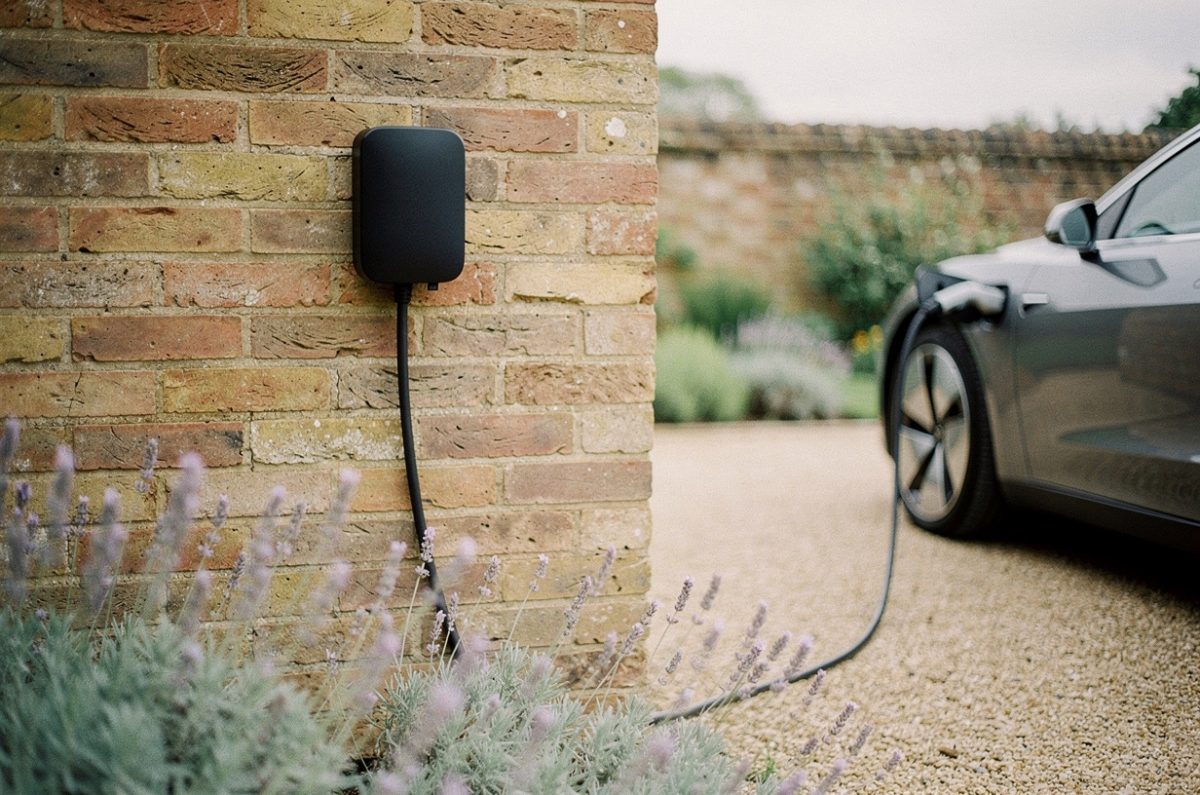
Getting a home charger fitted is usually simple — but whether it’s a plug-and-go afternoon or a bigger job comes down to three things: how far your fusebox is from the parking spot, what your incoming supply can take, and whether your fusebox has room. Here’s what actually matters, in plain terms.
First thing to know
A standard home charger is 7kW, which draws about 32 amps — a serious, continuous load, roughly like running an electric shower for hours. That means its own dedicated circuit in armoured or correctly-sized cable, its own protection, and in nearly all cases a device called load management or an OLEV (now “grant-standard”) setup so the charger backs off if the house is already drawing heavily. Most Surrey homes have a single-phase 60–100A supply, which is fine for one 7kW charger. The two things that add cost are distance (a long cable run down the drive to a detached garage uses more armoured cable) and a full fusebox with no spare way, which needs a small board or a new consumer unit. We also notify your network operator (the DNO) for you — that’s a legal step people often don’t know about.
Safety note
Never run an EV from a normal 13A socket and an extension lead as a long-term setup. Domestic sockets and leads aren’t built for hours of near-maximum current and they get hot — this is a genuine and common cause of garage fires. A proper charger on its own circuit is the safe answer, not a luxury.
When to call us
Call us if you’re getting an EV, or already have one and you’re trickle-charging off a socket. A Redfern install starts at £520 for a straightforward 7kW unit near the board, includes the protection, DNO notification and certificate, and we’ll tell you honestly on the visit whether your fusebox needs anything first. Ask us about current grant eligibility too — for flats and rentals it’s still worth checking.
Want a price for this?
Get an honest range in two minutes with the instant estimate — no contact details needed.